
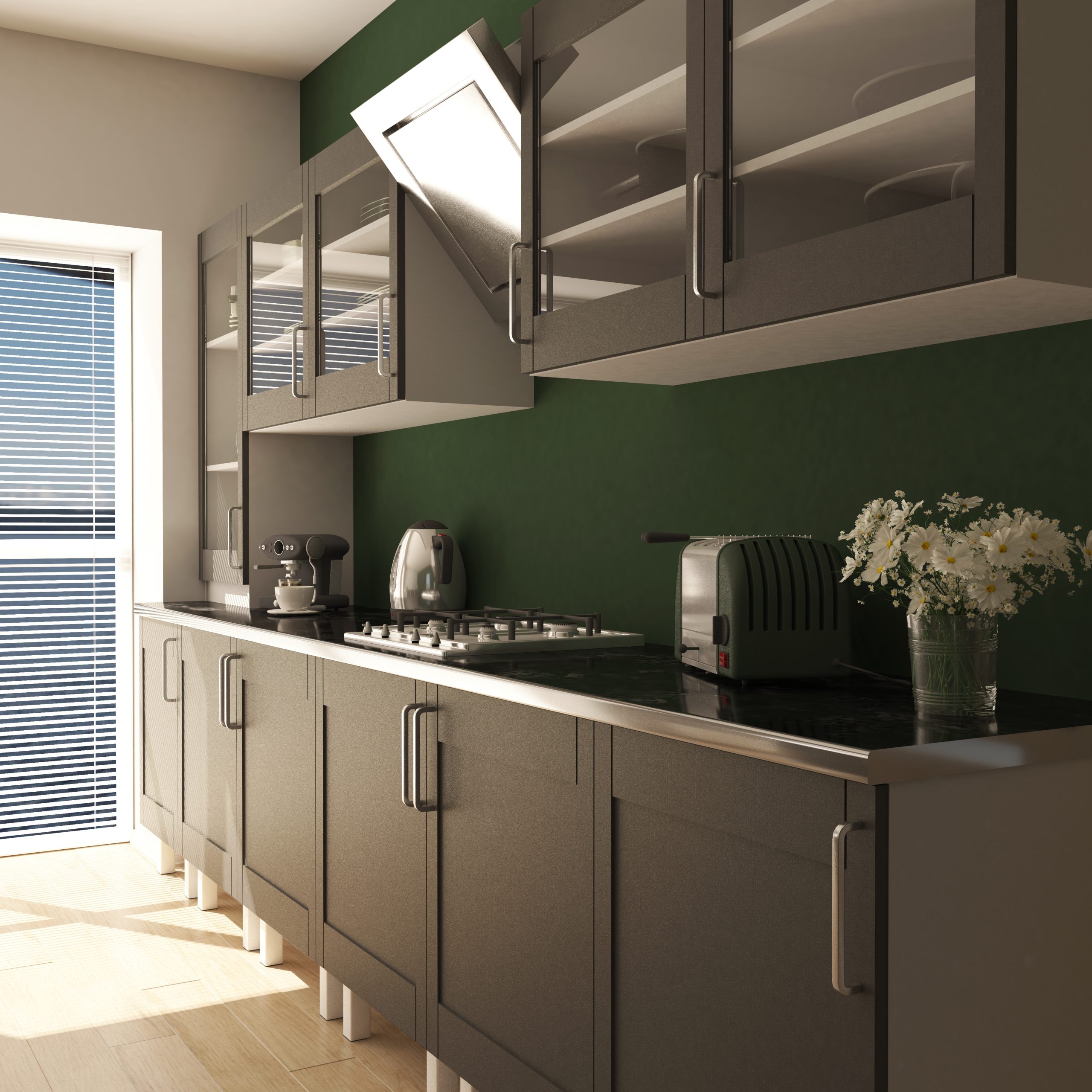
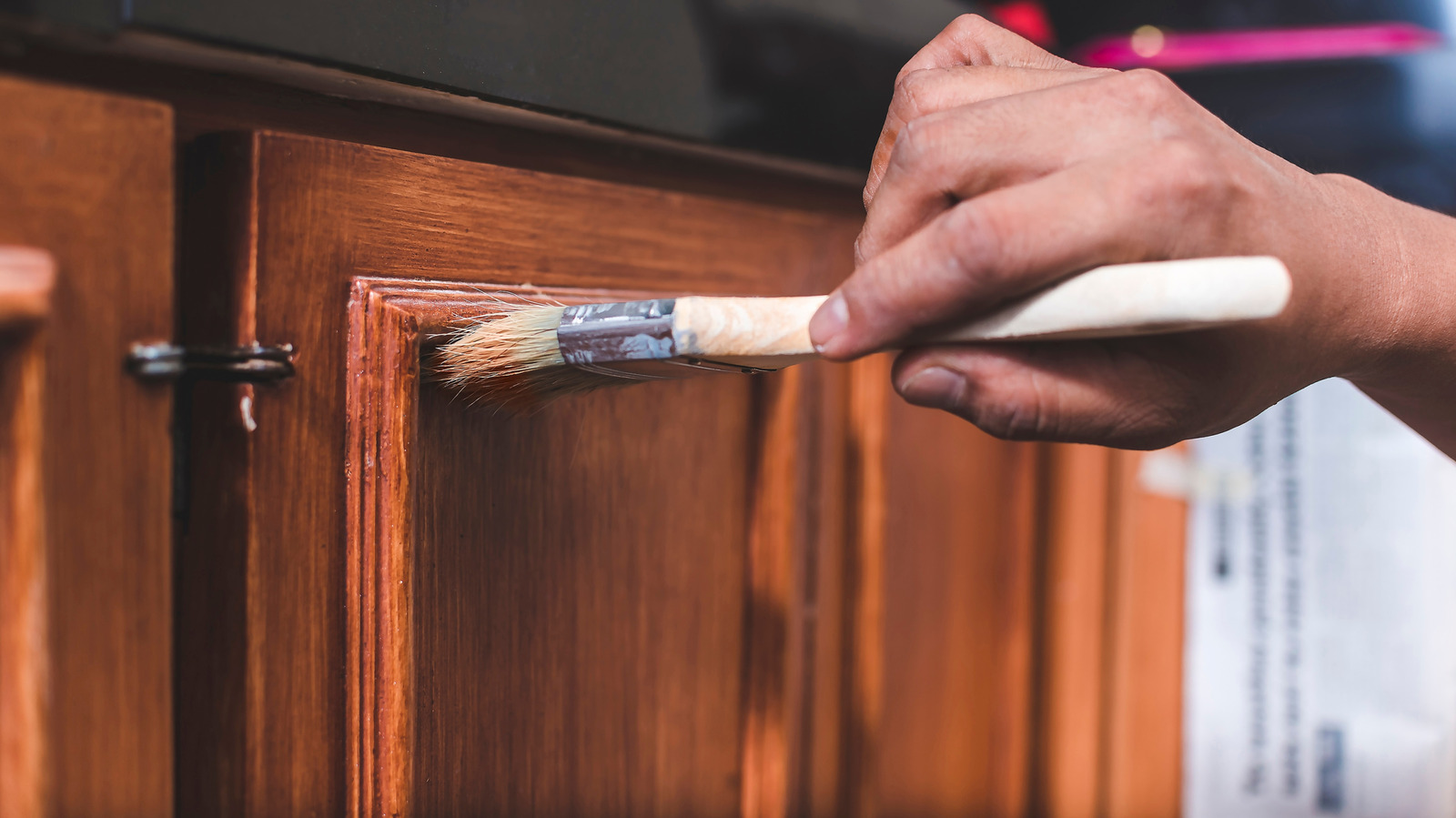
Cabinet refinishing is the process of removing an existing finish from cabinet surfaces and applying a new one. This can mean stripping old stain and applying a fresh stain in the same or different tone, removing worn paint and repainting, or switching from a stained wood look to a painted finish altogether.
Refinishing differs from resurfacing (which involves applying new veneer or laminate over existing surfaces) and from replacement (which involves removing and replacing the cabinet boxes, doors, and hardware entirely). Refinishing works with what is already there. The structure stays in place, and the work focuses entirely on the surface.
It is a practical option for cabinets that are structurally solid but have a finish that has faded, chipped, yellowed, or worn through in high-contact areas.
We assess the surface condition of the cabinets, the existing finish type, and the material underneath. Cabinet doors and drawer fronts are removed and taken to a prep area so we can work on flat surfaces.
The old finish is stripped using appropriate products for the material and finish type. On wood cabinets with stain, this typically involves chemical strippers and light sanding. On painted cabinets, we strip or sand down to a clean surface.
All surfaces are sanded to remove residue from stripping and to open the grain or create a profile for the new finish. This step is done in stages with progressively finer grits depending on the final finish planned.
Minor surface damage, gouges, or worn edges are addressed before the finish goes on. This is part of the prep phase and is included in the project scope.
Painted finishes get a primer coats formulated for cabinetry. Stained finishes get a pre-stain conditioner on woods that are prone to blotchy absorption, like pine or maple.
We apply stain or paint using spray equipment for doors and drawer fronts and by brush and roller for cabinet boxes on-site. Multiple coats are applied with proper dry time between each.
A protective coat is applied over the finished surface. This is the layer that handles day-to-day wear, moisture, and cleaning. We use topcoats rated for high-traffic surfaces.
Doors and drawer fronts are rehung, hardware is reinstalled, and the kitchen is returned to working order.
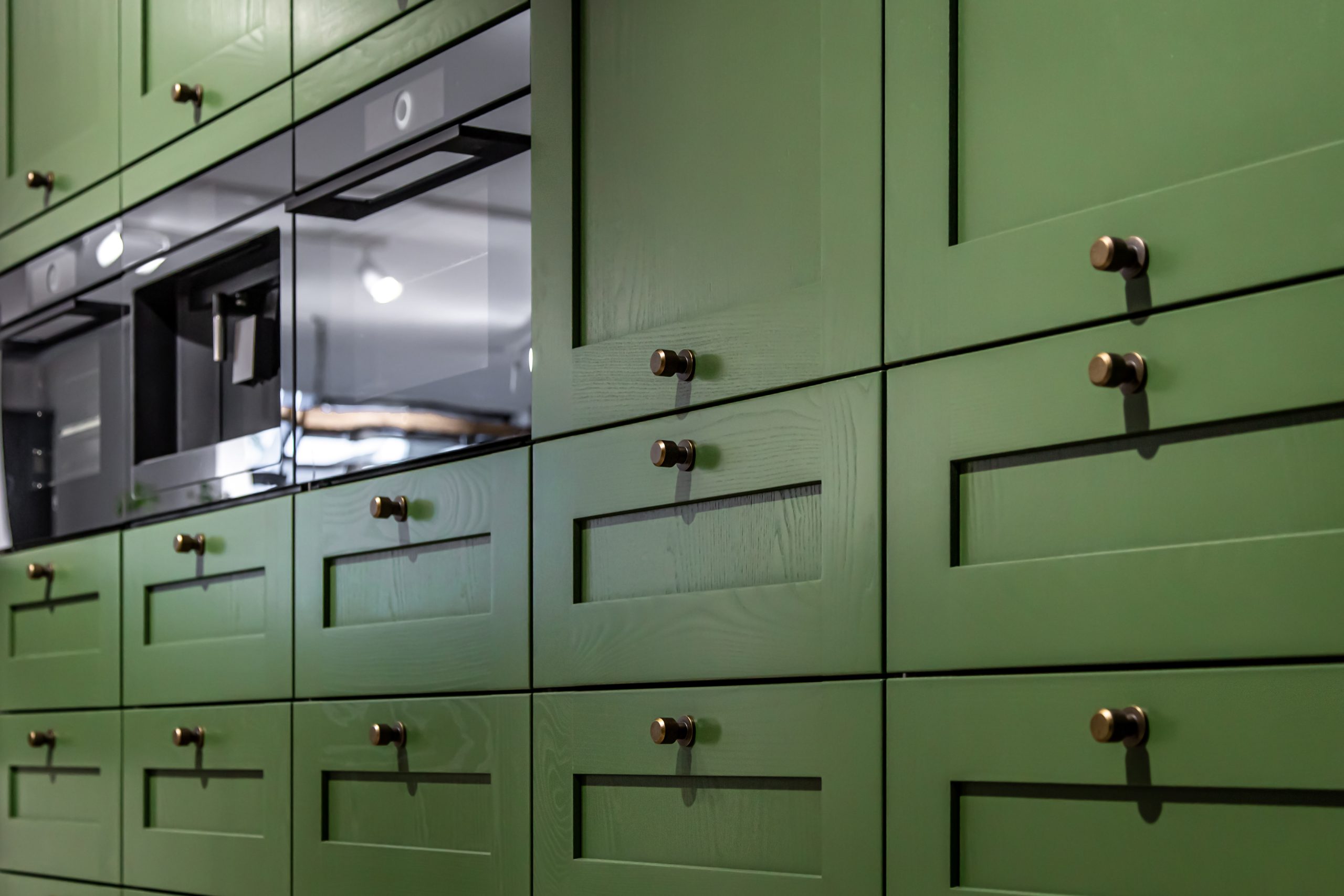
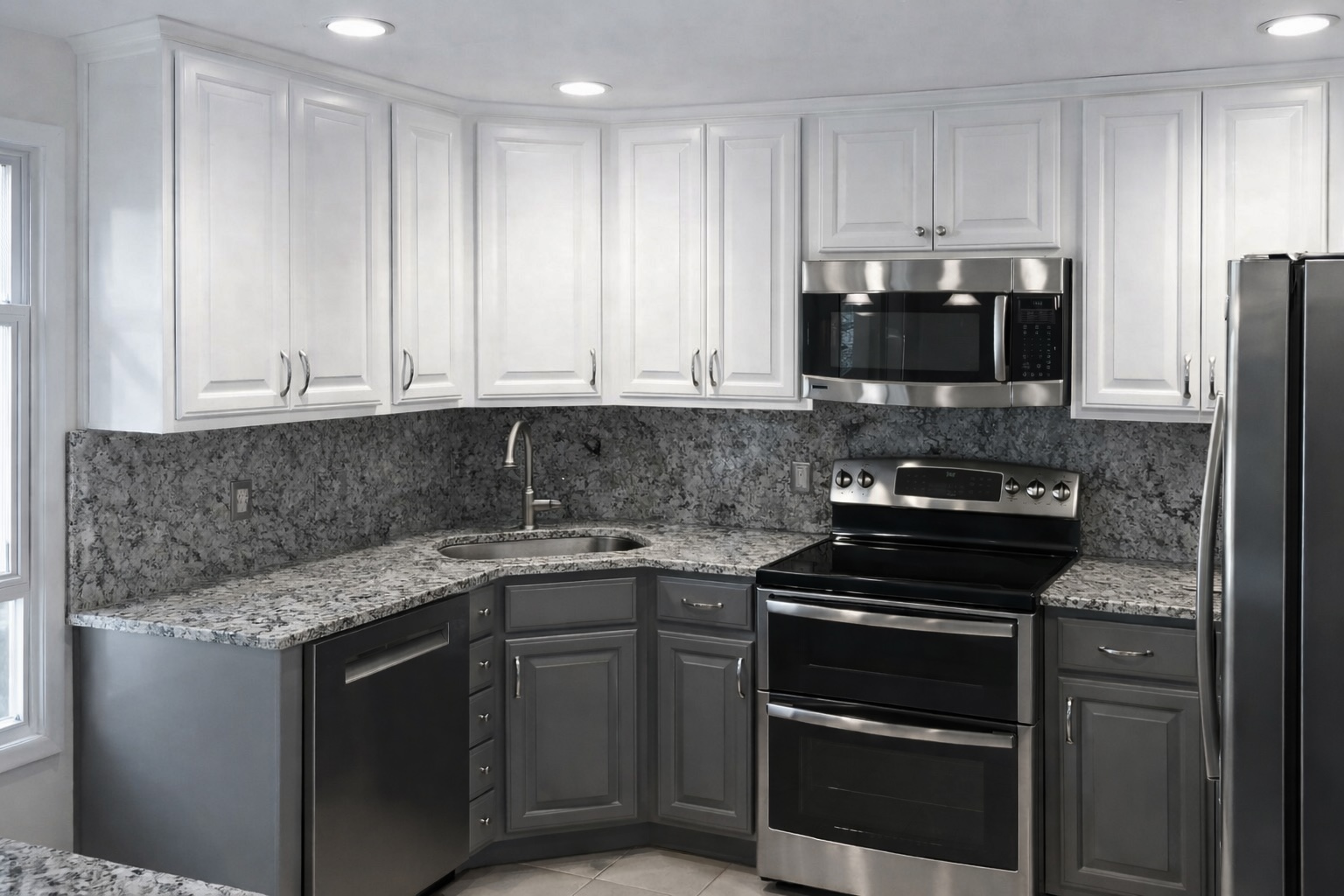
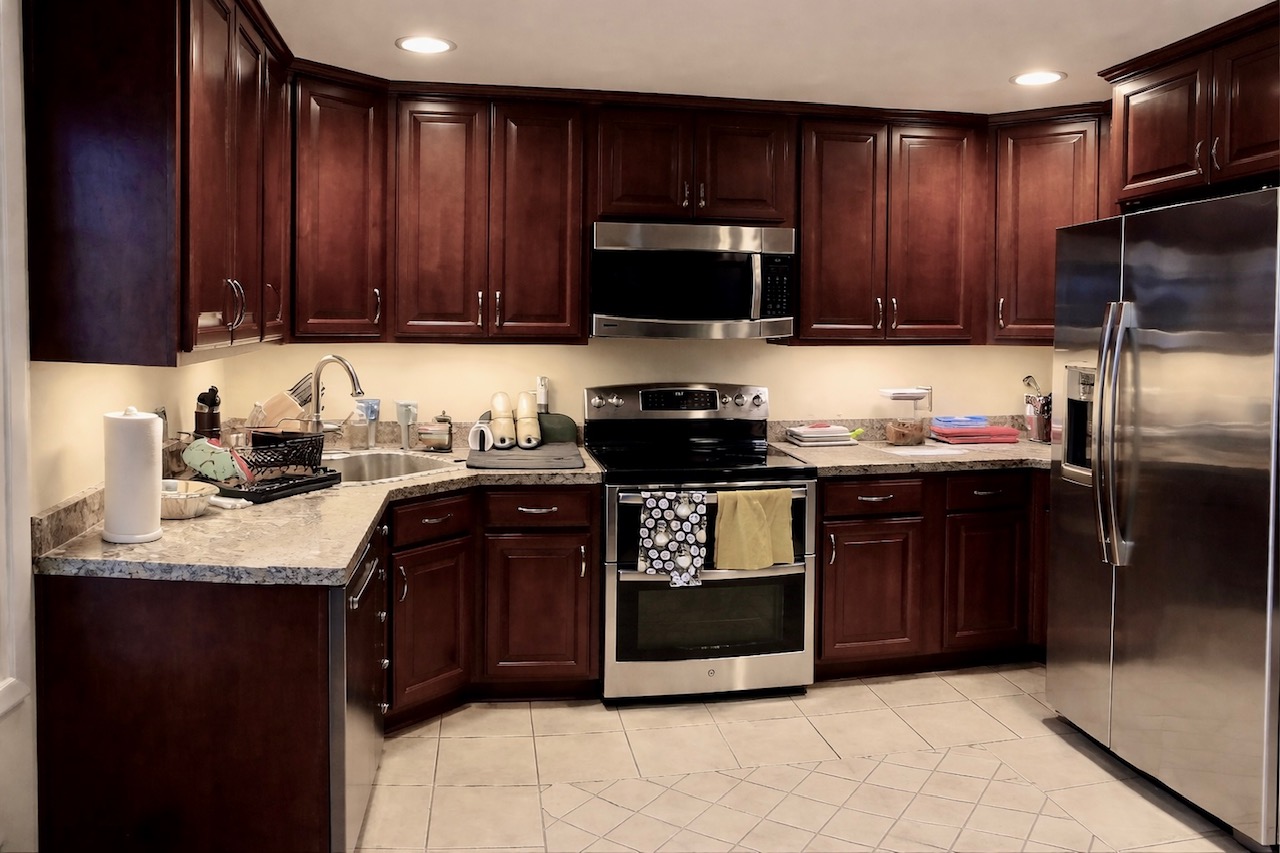
The shift in a kitchen after cabinet refinishing is significant. Kitchens that looked dated with honey oak or worn finishes take on a completely different character with a fresh stain or coat of paint.
We have worked on kitchens in Pittsburgh from row homes to larger suburban properties, and the results hold across cabinet styles and kitchen sizes.
Most projects take three to five days. Kitchens with a large number of doors or those requiring more extensive prep may take slightly longer.
You do not need to empty the inside of the cabinets. We work on exterior surfaces, doors, and drawer fronts only.
In most cases, no. Once a wood surface has been painted, the grain is typically not in a condition that takes stain well. We assess this during the walkthrough.
Yes. Islands are included in the scope of a kitchen refinishing project and quoted accordingly.
We offer touch-up services for refinished cabinets that have taken minor damage. Specific warranty details are provided in your written quote.