
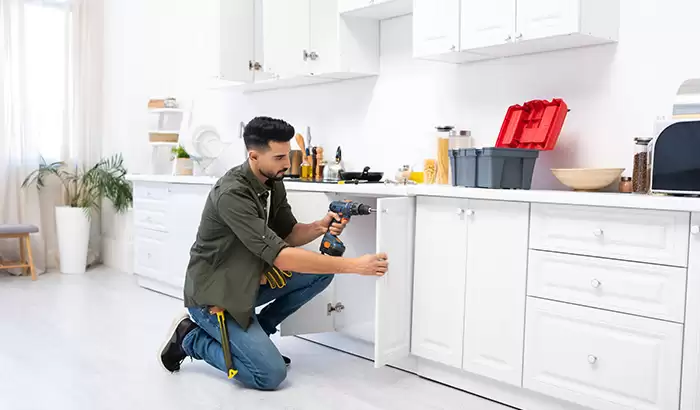
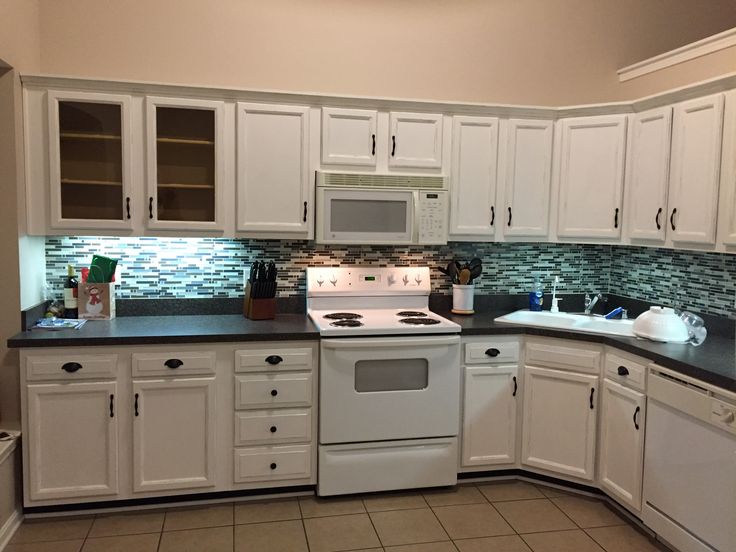
Cabinet restoration covers the process of repairing, cleaning, and refinishing cabinets that have taken damage or wear over time. It goes beyond a standard repaint or refinish because the work addresses the condition of the wood and structure before any finish is applied.
Restoration is the right call when cabinets have physical damage, not just a finish that has aged. That could mean wood that has dried out and is showing surface cracks, doors with water damage along the bottom edges, joints that have loosened, or veneer that is lifting in spots. The goal is to bring the cabinet back to a functional and presentable condition without replacing it.
It is a different scope of work than refinishing alone, and it requires assessing each cabinet individually rather than treating the kitchen as a single uniform project.
The line between a standard refinish and a full restoration comes down to the condition of the material, not just the surface. Restoration makes sense when:
If the damage is limited to the surface finish, a refinish or repaint is the right call. If the wood itself has degraded or the structure has issues, restoration addresses those problems before the new finish goes on. We make that call during the walkthrough.
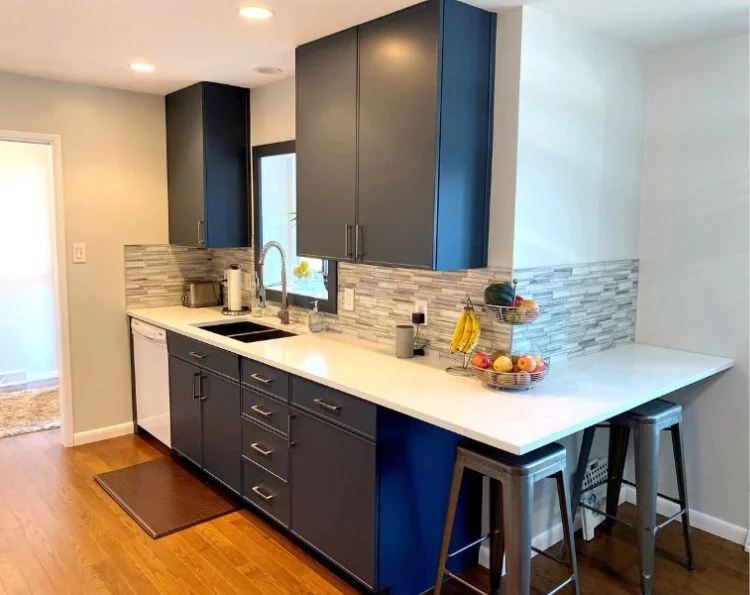
Water damage is one of the most common issues in Pittsburgh kitchens, particularly on lower cabinets near the sink. It shows up as dark staining, soft or spongy wood, swelling along door edges, and finish that has bubbled or peeled away. Depending on the extent of the damage, we can stabilize the wood, fill and repair affected areas, and refinish the surface.
Wood that has dried out over time develops hairline cracks across the surface, a condition called checking. This is common in older kitchens and in homes that run dry in winter months. We fill and sand these areas before applying finish so they do not read through the final coat.
Veneer that has started to lift or bubble can be re-adhered in many cases if it is caught before the material tears or breaks. We use appropriate adhesives and clamping to bring veneer back down and allow it to cure before sanding and finishing.
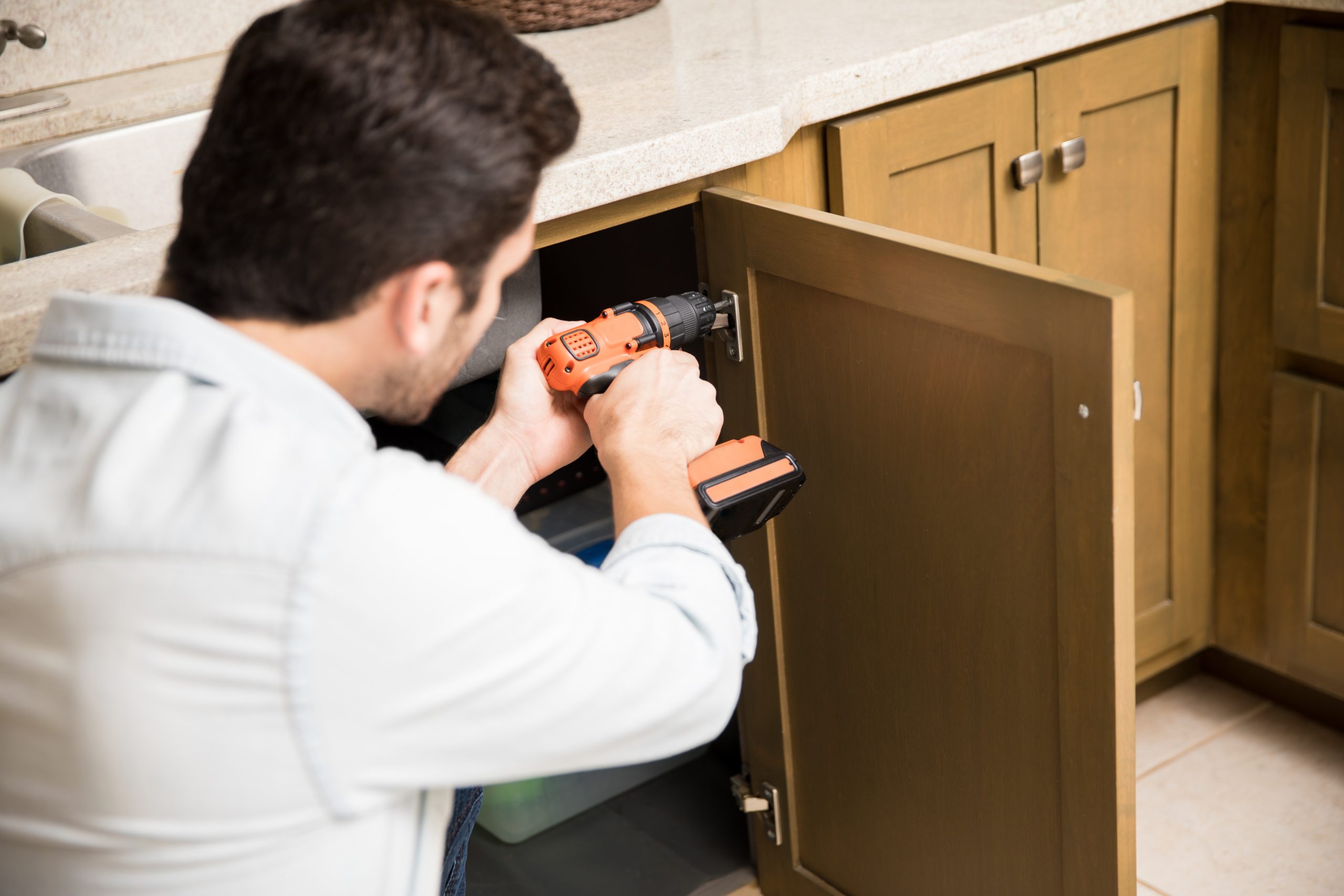
Cabinet boxes and face frames that have loosened at the joints get re-glued and clamped as part of the restoration process. Doors that have sagged due to loose hinges are assessed to determine if the hinge itself needs replacing or the hole has stripped and needs to be filled and re-drilled.
High-contact edges on doors and drawer fronts wear faster than flat surfaces. Chipped or worn edges are filled, shaped, and sanded before finishing so the profile reads cleanly.
Every restoration project starts with a full assessment of the cabinets. We look at each door, drawer front, and cabinet box individually and note the type of damage, the material, and what the repair requires. This is how we put together an accurate quote and a clear scope of work.
All surfaces are cleaned and degreased. Depending on the condition of the existing finish, we strip the surface back to bare wood or sand it down to a stable base. Grease, wax, and product buildup have to be fully removed before any repair work or new finish will hold.
All identified damage is addressed in this phase. Wood filler is applied to cracks and surface voids, veneer is re-adhered where needed, loose joints are re-glued, and edges are repaired and shaped. Repairs are allowed to cure fully before sanding begins.
All surfaces are sanded in stages, starting with coarser grits to level repairs and finishing with finer grits to prepare for the topcoat. Sanding is done by hand and with orbital sanders depending on the surface.
For wood cabinets being restored to a natural finish, stain is applied after a pre-stain conditioner on woods prone to blotchy absorption. For cabinets being painted, a primer coat rated for cabinet surfaces is applied.
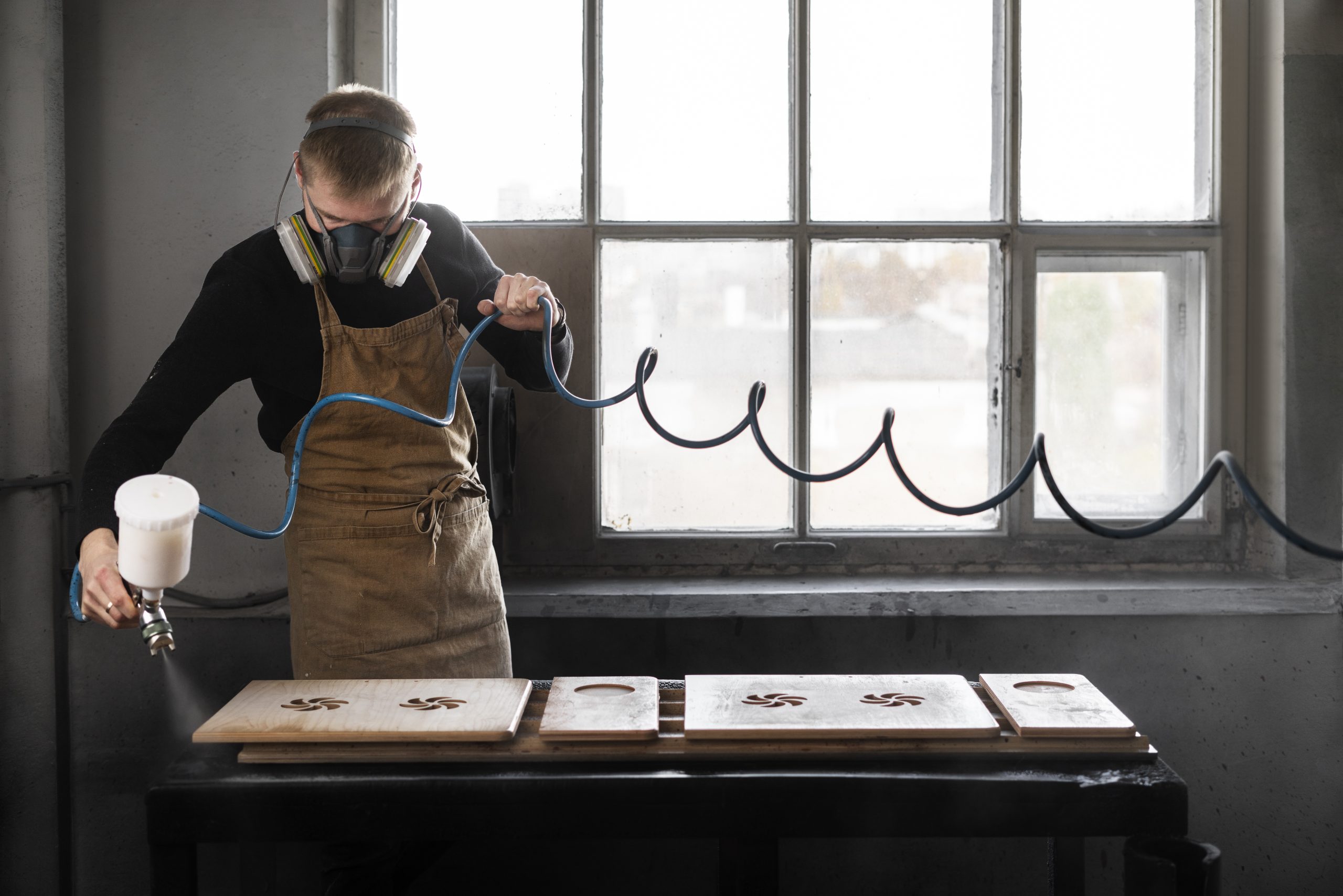
We apply the final finish using spray equipment on doors and drawer fronts and brush and roller on cabinet boxes. Multiple coats are applied with full dry time between each pass.
A protective topcoat rated for high-contact surfaces is applied over the finish. This is the layer that handles daily wear, moisture exposure, and cleaning.
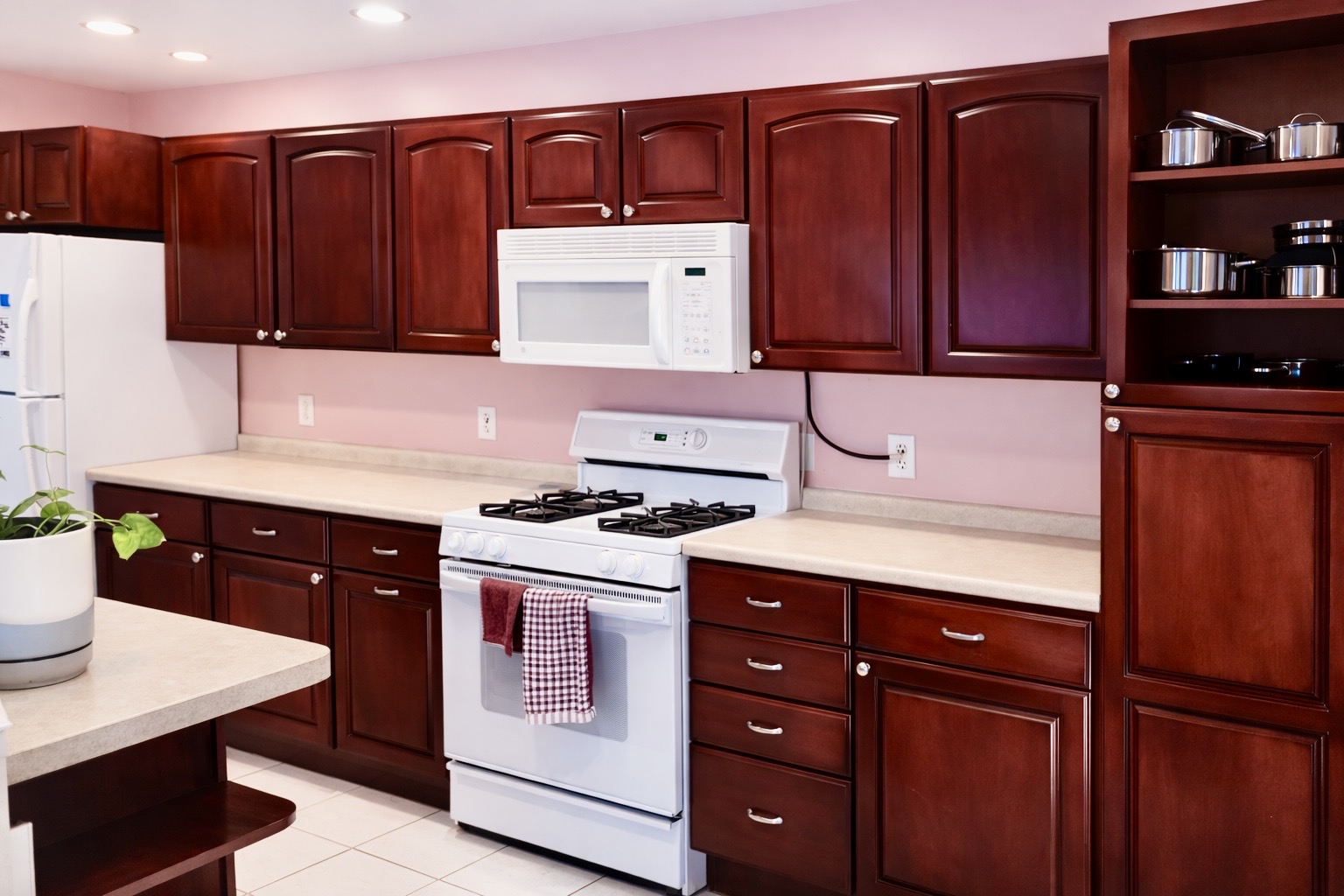
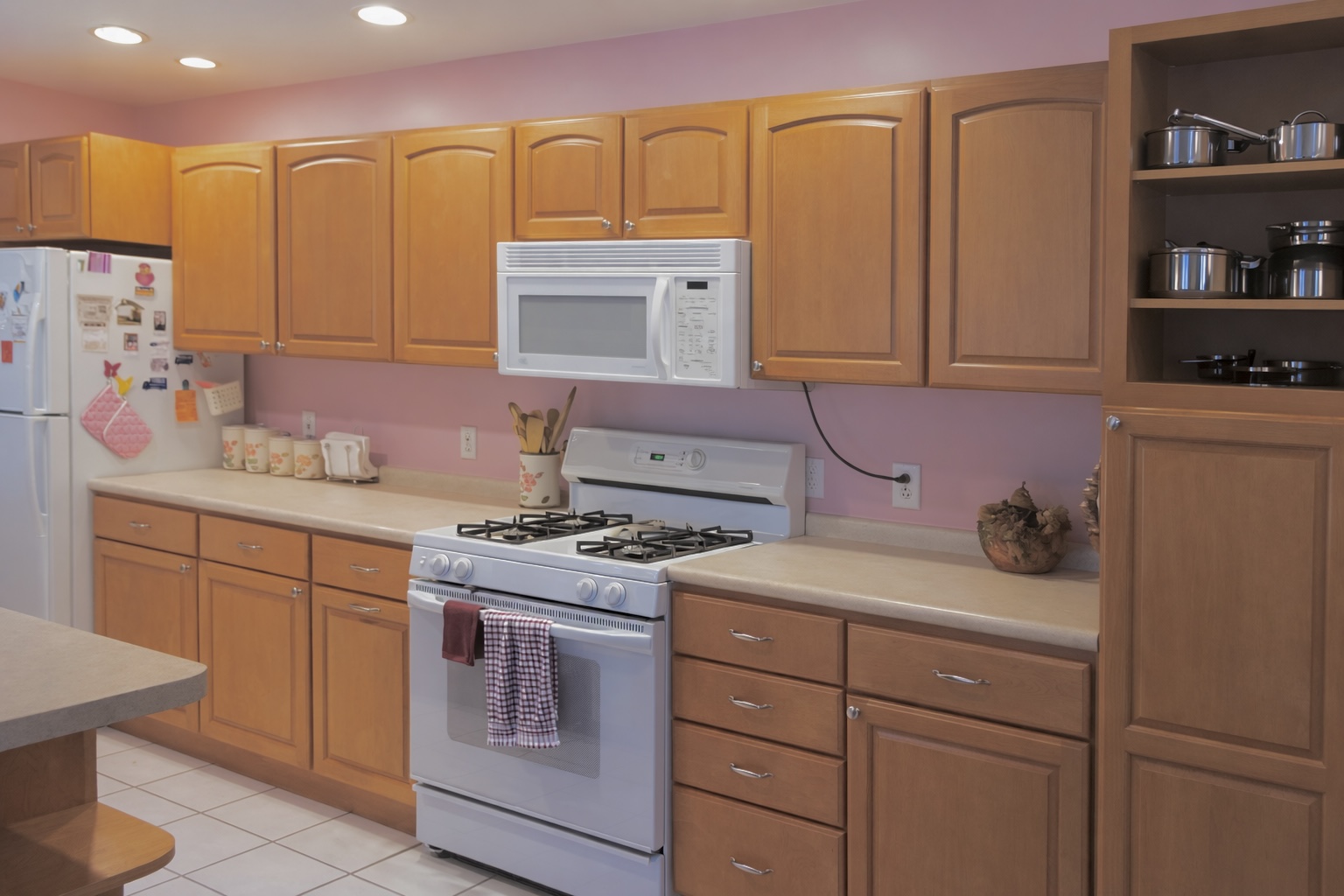
Cabinet restoration projects produce some of the most noticeable results we deliver. A kitchen with dried-out, cracked, water-stained cabinets looks completely different after a full restoration, and the change is achieved without touching the layout, countertops, or flooring.
We have completed restoration projects on homes across Pittsburgh ranging from century-old properties in Shadyside and Squirrel Hill to postwar ranch homes in the suburbs.
Older Pittsburgh homes often have kitchen cabinets from the mid-20th century that are built better than most of what is available today. Solid wood construction from that era is worth saving when the structure is still sound. We have experience working on vintage cabinets in homes across Pittsburgh and know what those materials respond to during restoration.
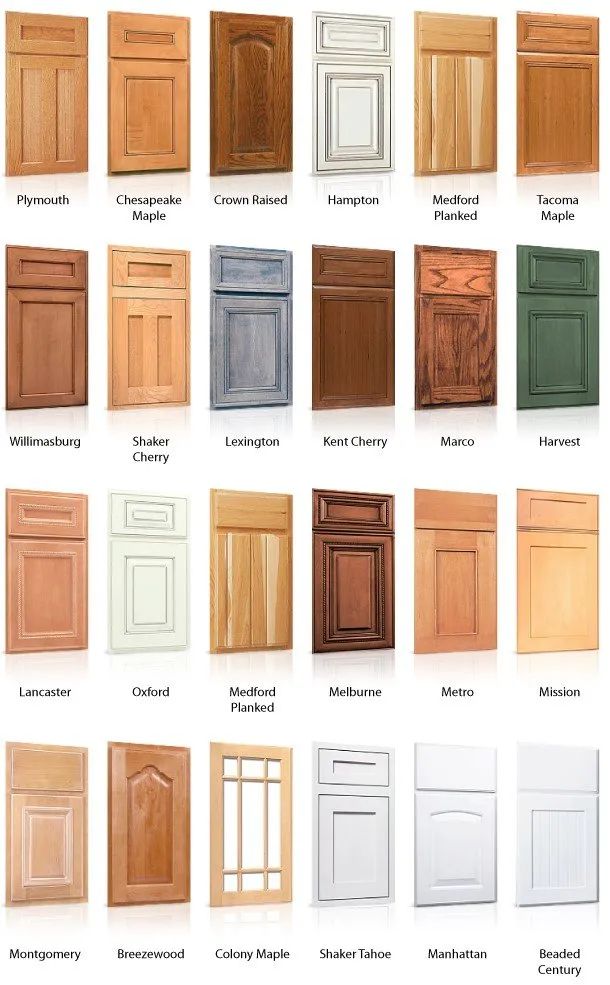
The process for vintage cabinets follows the same prep and repair approach but pays closer attention to preserving original profiles and details that give older cabinetry its character. We work with stain colors that suit the wood species and age of the piece rather than pushing every restoration toward a modern painted finish.
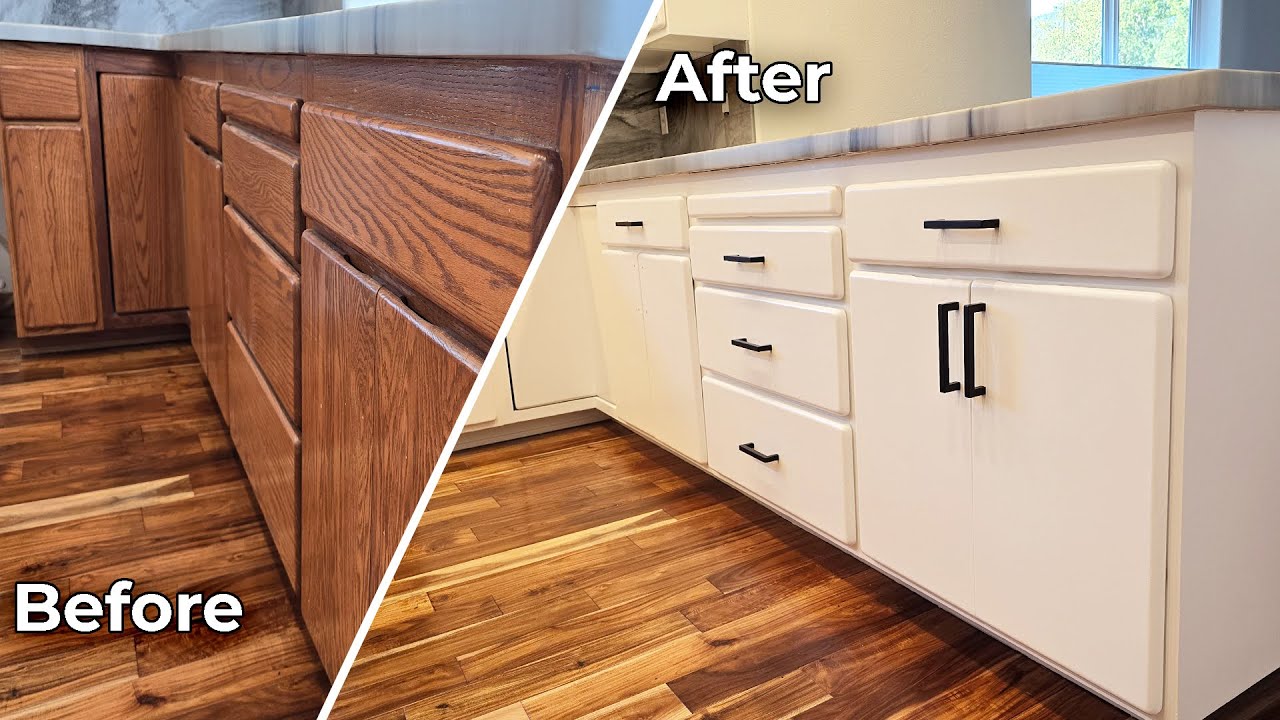
If the damage is limited to the finish, a standard refinish is the right call. If the wood itself has cracks, water damage, or structural issues, restoration is what the project requires. We assess this during the walkthrough and give you a straight answer.
Not always. If the structural damage is too extensive or the wood has deteriorated beyond repair, we will tell you that during the assessment rather than take on a project that will not hold up.
Yes. We restore bathroom vanities, built-in cabinetry, and other wood cabinet work throughout the home.
Most projects take four to seven days depending on the scope of repairs and the size of the kitchen.
We work on oak, maple, cherry, hickory, walnut, pine, and other wood species common in Pittsburgh homes.
Yes. We assess all hardware and replace what is no longer functioning correctly. Hinges, drawer slides, pulls, and knobs are all evaluated during the project.
We stand behind our repairs and finish work. Specific warranty details are provided in your written quote.